20/09/2012

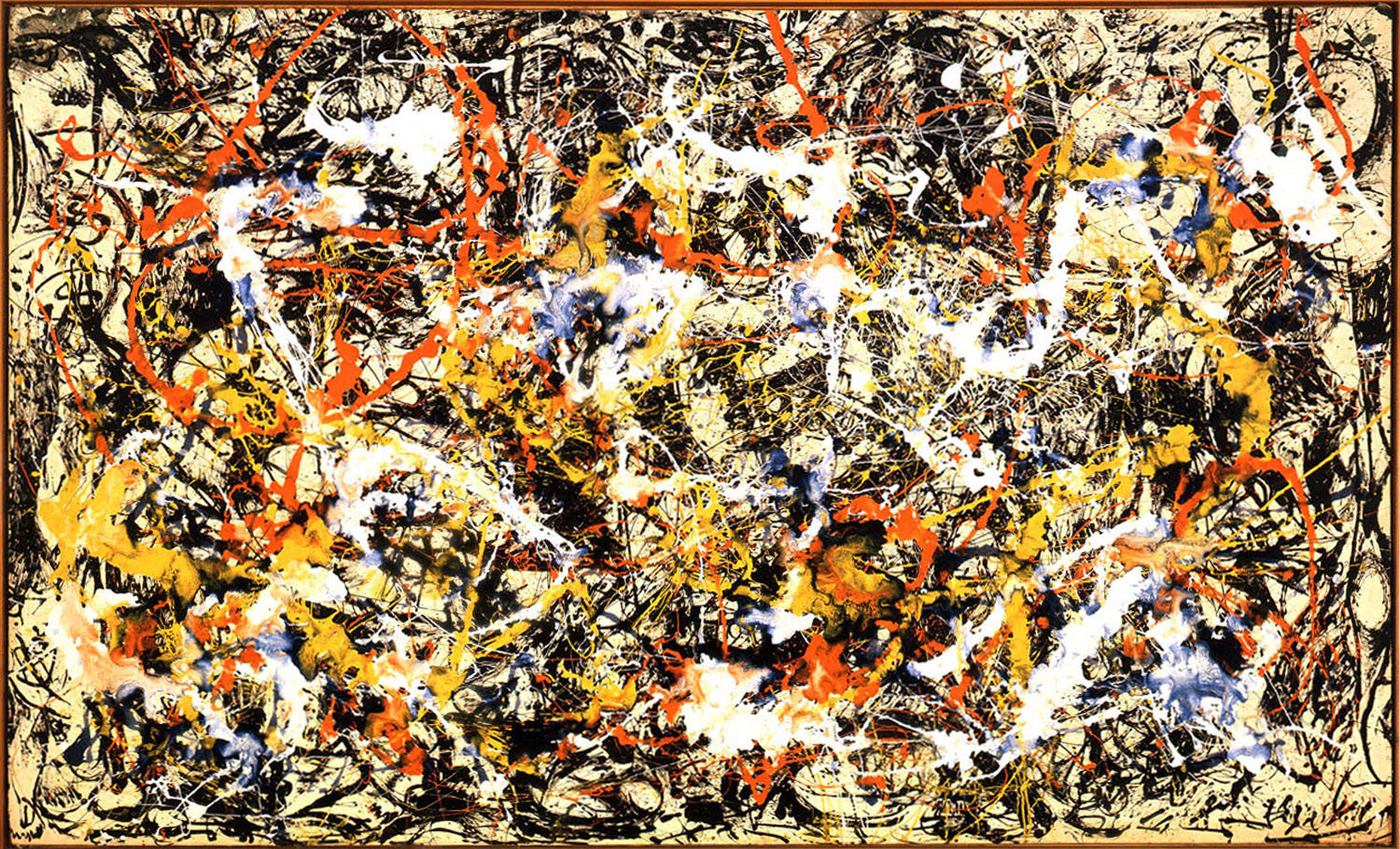
CONVERGENCE

Convergence by Jackson Pollock (1952)

I often fall into the habit of putting Fashion under the same light of other subjects I find myself reading about. And in doing so, I've come to realise how easy can formed opinions be furiously dismissed. This comes to be interesting in Fashion contexts where everyone seeks to make 'statements' and at the end no one truly knows what anyone meant to say. Here I am anyways, trying to present my very own one. 

Borrowing some of the thoughts of Henry Jenkins in the introductory chapter of his book Convergence Culture and merging them with my last inspection of London Fashion Week, this statement goes as it follows:

Fashion, as the current landscape may depict, finds itself in a highly contradictory state. Sometimes it seems to find itself at its best, but some others results to be an act of embarrassment. For instance, the work of young creatives becoming visibly accesible, the exploration of style self-expression through new media, or the spread use of new technologies in digital textiles, knitting, mass customisation and even DYI processes, seem to infere a more inclusive landscape. At the other edge, however, centralised capital in the form of luxury brands and fast fashion chains, expands its domain until every avenue in every city is saturated with their stores. And also as expected, centralised production in developing nations threatening life conditions and local entrepreneurship. Thus, either fashion celebration or condemnation, as postmodern theories proposed, are the only two perspectives of this complex capitalist phenomenon. 

It is also clear at this state, that no industry is exempt of the technological, social and cultural change and for Fashion, although still held by the magic illusion of its lights, textures, patterns and colours, the last decade has signified more than superfluous changes. Digital technologies have lowered Fashion media production and distribution costs, expanded the range of delivery channels, and enable the audience to participate by appropriating and recirculating content in new ways; the power of the bloggers has never been so extended. But also, movingly conglomerations of media power into clusters work for the benefits of the same big corporations, and the once independent voice of bloggers now is commoditised by a culture of "freebies"started by luxury brands. These latter, dominating again all the media spectrum.

As Jenkins points out, no one seems capable of describing both set of changes at the same time and their impact upon each other. Some fear that the system is out of control, others that it is too controlled. Again, the truth lies somewhere in between.    


11/06/2011

Why do we have to dress well?

VOGUE MATRIOSHKA
Según muchos, quizás la parte más esclarecedora de nuestra personalidad está en nuestro atuendo. En teoría, el vestuario advierte a otros sobre nuestro estado como seres humanos, aptos para la reproducción. Vestirse bien en nuestra sabiduría capitalista, o el hecho de llevar cierta marca encima, le enseña al del frente, a los del bus, al que nos entrevista, al que amamos; que genéticamente estamos en buena forma. En el diccionario cultural, llevar un objeto socialmente considerado como lujoso significa que hemos acumulado tantos recursos, que invertir unos cuantos miles en frivolidades resulta un encanto.

Por mi parte, es bastante fácil señalar que cada vez me visto peor. Y qué más da, si hoy en día vestirse bien es tan fácil! Vírgenes de las tendencias quedan más bien pocas, y todas en peligro de extinción. Ya nadie se embarca en la misión de buscar un estilo. ¿Para qué? Si ahora los pueden tener todos y acomodarse a cada uno. Prendas de diseñador a precio de masa; posts a diario, revistas semanales, biblias mensuales con instrucciones precisas de qué va bien con qué, un paso a paso para la aceptación visual. A lo Hansel & Gretel, se siguen las migajas de un sendero que otro primero ya atravesó.

Para mi vestirse ‘bien’, tener un estilo, es más que nada, un problema ético, una cuestión de decencia. Siendo más gráficos, es un problema de dirección. Vestirse es un ejercicio de emigración de historias internas a una corteza exterior; pública. No, nunca, jamás de empañetar nuestro manojo de vergüenzas y buscarle disfraces a lo que uno es. Más bonito si dejamos el engaño, si nos lanzamos a la espontaneidad torrencial, si en vez de ahorrar para una revista, invertimos en un endoscopio. Mi reino por un retroceso a la sinceridad, a darnos el lujo de ser feos, tocar fondo y ser vistos. Usar el fruto de las ricas cosechas, propiedad de increíbles diseñadores, como método para comprender y rescatar nuestras sinceras intenciones. Ya que somos felices diciendo que estamos locos, que el mundo se acaba, que somos únicos; vistámonos mal.

10/06/2011

Fashion. Where is your language?


Llevo dos meses leyendo que la moda es, antes que nada, dicción. La sensibilidad humana, por amplia que sea, pasa en el vestuario poco inadvertida ante la más angosta sensibilidad del lenguaje. Transparencias, colores neón, taches y cuero, por detonantes que parezcan, ceden importancia frente a la actitud, el compromiso y la intención que el individuo asume frente a cada camiseta; frente a cada prenda y sus matrimonios ornamentales. Aún así, en el mercado de estilos e identidades ya nadie parece recordar su propio lenguaje, o la mísera intención de expresarse en él. A estas alturas, 24 años, sigo sintiendo que mi ropa tenía más proyección visual y autenticidad cuando tenía ocho. Ayer justo, vino mi vecina e hizo notar enloquecidamente que tenía mis mismos zapatos, -“unos así, igualitos! de plataforma y correitas”-. Y entonces me pongo a pensar; ¿y si ella, en secreto, también anhela y se deja seducir por las alturas y la exigencia de equilibrio y posición ante la vida?, ¿habrán otros nexos más esotéricos y poco verosímiles entre nosotras? Pero naturalmente, mi globo vuelve a estallar en la realidad y concluyo para mi: ‘Meeeh! A quién engaño. También vio unas parecidas por Internet y ambas fuimos víctimas del mercadeo’. Entonces ¿dónde queda el lenguaje?

19/05/2011

Abducted by CULTS

El amor en cualquiera de sus formas es una narración complejamente simétrica. //  Love in any kind of way is a complexly simmetric tale.

14/05/2011

Curation Thoughts on a Particular FashionFilm

Recently Fashion Films have become a part of my weekly updating, not only because of their talked popularization but because their elaborated production sort of forces me to speak about them. Comments sections on youtube or vimeo are always well and good for people to express their opinions, and it must be very rewarding for creators to know how many people "Totally adored" their films. However, in my case it is important to respond in almost the same elaborated way to something that has enriched my senses so gloriously and therefore dig into what made me fancy it.


There is no doubt that the impact generated by audio-visual media in the fashion audience turns out to be highly effective. The reiteration of a moving image reinforces the link between viewer and clothes, prolonging it in the memory through the narrative and sensory experience that Fashion Films manages to generate.

From the hand of Gareth Pugh's collection, inspired by Renaissance religious imagery and Florentine style brought to their extreme modern idea, this fashion-film directed by Ruth Hogben catches my attention with the special monochromatic and minimalist dynamic of this director who using a set of light and shade contrasts achieves, as Renaissance painters did, enhancement of organic forms, showing off a human figure close to perfection and fashion garments highlighting the concept of volume, geometry and proportion.

The repetition of symmetric figures based on mirrors enhances the geometric character of the collection, while elements such as Air, Water and Speed call attention to the organic shapes, reminding us a continuous juxtaposition of two poles, geometric and organic, light and dark, man and God. A type of perspective where actors are seen from below turns the scenes into animated paintings displayed in the dome of a cathedral, explaining the collection from the reinterpretation of its own context.

The accurate atmosphere this production has given to the clothes, plus the obvious sensitivity the garments were displayed with and the power and magnificence of its visual and audio content support and convey a clear idea of luxury and modernity proper to Gareth Pugh’s work and likewise, demonstrate the acquired value of new media into the highly perceptual world of fashion.

17/04/2011

Creativity. Its new role in the fashion industry


The question of whether fashion is an art or a business is an imminent challenge for those who begin to explore the various ways of this industry. Heterogeneity and the increasingly difficult characterisation of society by market segments highlight the influence of powerful forces such as marketing and advertising in the conformation of market preferences, leading them to levels of desire increasingly complex and demanding.

On a daily basis, and especially in the fashion world, societies seem to be involved within dynamics based on creating illusions and ideals attainable primarily through the acquisition of certain items that accompany a piece of art displayed glamorously across magazines and hoardings. Fashion, as a creative process, fulfils its purpose representing the ideals of a society; but those ideals are shaped according to the taste of a group of people consuming the same information and thus predisposing them to perform the respective associations between the market offer and their personal desires. As such, fashion grows and develops, not as art but as a business.

In this context, the role of fashion designers, like any other designer, cannot only be based on their free will and imagination; as contrary to an artist, a designer works with and for other people, caring about their problems rather than in solitude. The designer is obliged to his brand as the brand is to the market; therefore it is the latter which judges not only the creativity of the pieces but their relevance through a rigorous discourse of purchase. As Norman Potter wrote in a chapter about Good Design, “… a well-designed product must be sold competitively. Experimental work may be chancy as a sales proposition” , emphasising the close relationship between sales and the designer's creative process.

However, that same statement also brings up the opposite situation where a number of less refined products are consumed daily. McDonald's and Primark are examples of this system where large companies focus their marketing strategies to launch mass products at extremely low prices, sacrificing quality and value. It’s difficult to imagine Primark’s design team discussing the most appropriate pocket slit on their jackets or reflecting through their creativity the aesthetic values of a society. In fact, it is commonly known that their design process is regularly limited to garments copied from other brands, with their plagiarism widely denounced over the years; “The clothing chain Monsoon is taking legal action against the discount retailer Primark for the alleged breach of the design rights pertaining to a number of items of clothing (…) Primark is currently involved in a high court dispute with H&M over the appropriation of designs and motifs on a range of adult and children’s clothing and have refused to comment on the case.”   If the copy, in an industry where creativity has always been considered as the core of its development, is so broad, massive and successfully sold, sometimes it results in the role of designer becoming indefinable and makes it increasingly necessary to rethink the concept of fashion both as business and in general.

Another striking example of the lack of originality applied to pieces and their impact on the fashion market becomes evident with the Spanish multinational, Zara. According to a study published by Harvard Business School in 2005 on the brand, its success is based on the hasty management of their supply chain, achieving 'design', distribution, and exhibition of a piece in stores in only 15 days, becoming one of Fast Fashion’s business leaders; “Such a retail concept depends on the regular creation and rapid replenishment of small batches of new goods. Zara's designers create approximately 40,000 new designs annually, from which 10,000 are selected for production. Some of them resemble the latest couture creations. But Zara often beats the high-fashion houses to the market and offers almost the same products, made with less expensive fabric, at much lower prices.”   With this general scheme in which major retailing companies are evolving, re-discovering the role of design becomes a challenge. The industry that once provided power and sovereignty to a group of designers and obeyed their every whim, is now focusing on promoting commercial, economic and organisational facts, meeting their markets needs and creating strategies to ensure  permanence within the collective memory.

Taking a look at Burberry’s strategy for London Fashion Week last February, the consensus was that rather than the attention of the brand being focused on their trench coats and handbags, it was instead focused on the following: the strategy of expansion through new media and networks, investment in innovative proposals for pre-ordering collection items via the Internet (using devices such as the iPad), plus a stunning message of democratisation of its shows. This included live-streaming on their website, at flagship stores, as well as in the public space. Burberry had transposed inspiration from the actual clothes to the communication, marketing and sales departments. 

Louis Vuitton has also been recognized for its groundbreaking use of new technologies. Their applications for mobile devices with geo-location, such as the recently launched Amber, focused their attention on the additional services that a luxury brand can offer to satisfy customers, rather than more traditional creative outlets such as their suitcases and bags.

Even though professors at my university insisted on the importance of creativity applied in products in a capitalist universe (even more in the fashion system), after looking roughly at the new commercial dinamics it always comes to my head the lesson that design skills on their own will never be likely to make you millionaire.  As a wide range of items and prices have changed purchase habits substantially, the phenomenon of Fast Fashion has created a turning point between what we knew as fashion and what we consume, brands have been forced to modify their business models, decentring them from clothes design and focusing on elements such as marketing and designing immaterial experiences that constantly change and reach people through multiple touch-points in order to create more powerful commercial relations. Product is no longer the focus; in the fashion battlefield Market Strategy is the new black.

08/02/2011

Madame Tutli-Putli


 La crisis económica me obliga a buscar planes donde no tenga que invitar a mis bolsillos; el de éste fin de semana fue cortesía de la página del National Film Board of Canada que le alimenta a uno la imaginación y el alma con cientos de corticos animados absolutamente hermosos de ayer y hoy. Uno en especial llamó mi atención, podría decir que me enamoró, y por eso me atrevo a presentarlo en ésta mi galería. Desde que lo vi llevo uniendo los puntos que forman ese círculo de atracción/obsesión/confusión/euforia/momento-melancólico, tan propio de la vida sentimental de aquellos que nos dotaron con corazón de niña; porque en efecto, el corto fue un espejo de femineidad, y como cualquier espejo frente a una chica, nunca responde, sino que juzga y cuestiona lo que uno trae encima. 


.
La estética vintage y su melancolía, tan frecuente en éstos días donde la vida va tan rápido como si la miráramos desde la ventana de un tren, como si la época en la que nos toco vivir nos confundiera tanto que nos vestimos de años pasados para reflejar nuestro apego al mismo, es la moda que hace de las nostalgias la época más cercana al alma. 

Madame Tutli-Putli  no solo me fascinó desde el primer momento con su romántico aire de Chanel y sus ojos enormes y redondos propios de esas personas que la vida los vive sorprendiendo; sino también porque en esa frágil, perdida y asustadiza personalidad vi expuestas mis más intimas preocupaciones. Como ella yo también huyo, con mi mundo y mis cosas porque no sabemos qué seríamos sin ellas, o qué sería de nosotros si otro las encuentra y les da mejor uso.  Tomamos un tren porque cualquier sitio es mejor que el presente. Titubeamos al escribir porque las cosas se empiezan con mayúscula, y en nuestra cursiva personalidad, las mayúsculas siempre nos toman tiempo. Hablamos poco, pero pensamos tanto que nuestra cara muda grita nuestros cotidianos diálogos internos, los mismos que a veces llegan a ser tan oscuros y sin sentido que la única salida es seguir soñando hasta convertirnos en polillas que en algún punto extienden sus alas y salen a la luz. Me pregunto qué habrán pensado las dos personalidades masculinas que autoras de éstos 17 minutos de introspección, porque uno aquí se pasó un domingo entero cuestionándose los miedos y alimentando los días de chica vintage y ellos probablemente duraron cuatro años innovando en técnicas de animación que uno apenas se entera porque google se lo contó. 

04/02/2011

This world of changes


No entiendo la moda, pero está tan metida en mis intimidades que terminé pidiéndole que se casara conmigo. Desde entonces y como en todos los matrimonios cada mañana nos enfrentamos el uno al otro en la habitación, de cara al closet. Mi ropa - conjunto de sólidos que cuelgan y se acomodan forzosamente a las variadas formas que le he dado a mi cuerpo – tiene, entre otras cosas, la capacidad de volverse tanto etérea como efímera, para liberar mi expresión o hacerme esclava de sus paredes de algodón y poliéster. Los colores de mi vestuario llegan por osmosis al interior y proponen mi actitud del día –“Hoy eres una punkera”- yo me las creo. 


Estrenar estimula a cambiar de postura, comprar ropa es equivalente a bienestar, pues culturalmente somos parte de un plan donde todo termina siendo obsoleto y necesidad ya no es salud y pensión, es remplazar la ropa por la de la temporada siguiente. El clima cambia, uno también. 23.5° de inclinación sobre el eje vertical de nuestro planeta lo alteran atando nuestras vidas a sus cambios constantes, haciendo que nos renovemos como un árbol con cada estación y le mostremos al mundo que el nuevo yo es mejor que el de hace seis meses. Remplacé mis Converse veraneros por unos Reebok en charol que me sirven para la lluvia, pero además pasé de ser underground-classic-punk a exhibicionista-social-trendy; y no siendo suficiente aún sigo pensando, pues en seis meses habrá que inventarse algo más.